
At Oregon State, an experimental robot brings engineers and agricultural researchers together to explore what it takes to pick a pear
__
By Ben Davis
A
mong the pear trees at Oregon State University’s Mid-Columbia Agricultural Research and Extension Center in Hood River, a robotic arm reaches toward the fruit. Small suction cups meet a pear’s delicate surface. Mechanical fingers close around it. Nearby, researchers watch, adjust equipment, and work at a laptop.For Brian Pearson, the center’s director, the promise of this experiment begins with the people gathered around the machine—from OSU’s College of Agricultural Sciences and College of Engineering.
“We have expertise from both colleges coming together to try to find new, innovative ways to overcome one of the largest challenges that we have in tree fruit production, and that is labor and mechanization,” he says.
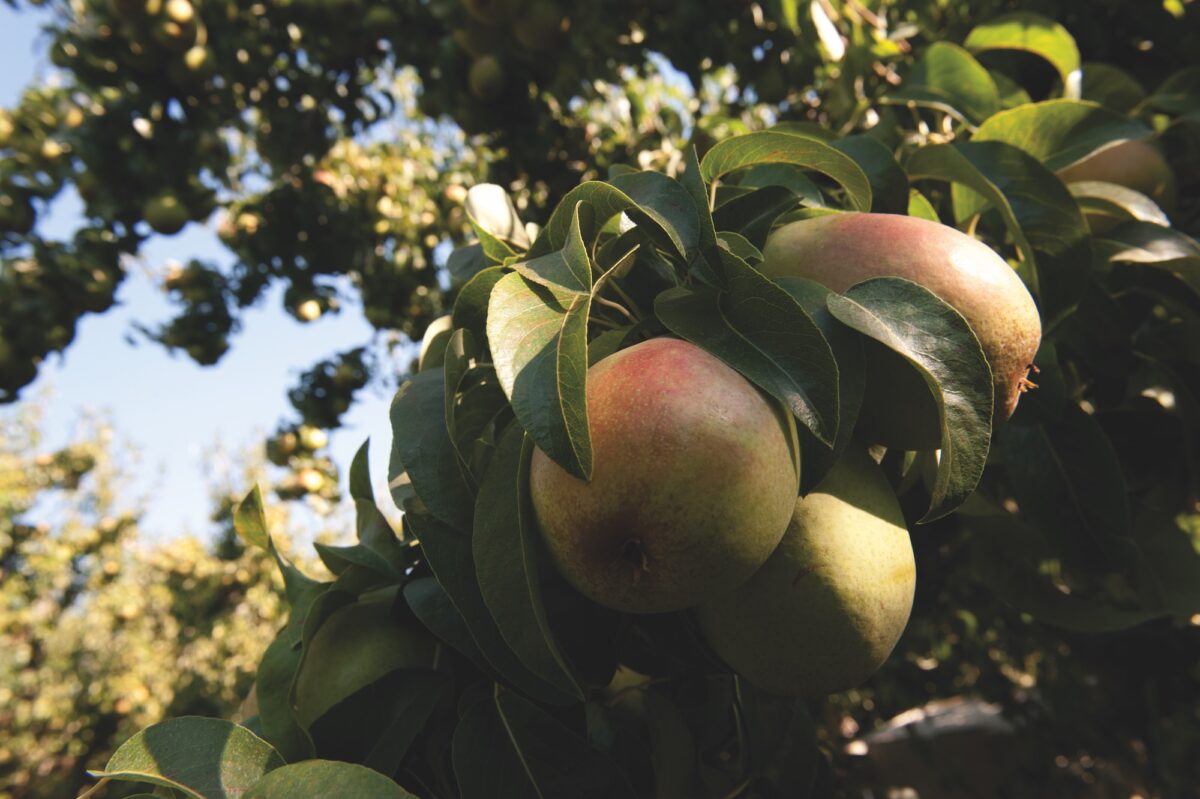
The collaboration is taking a robot originally developed to harvest apples into unfamiliar territory: its first trials with pears. The work is highly experimental. Researchers are exploring the basic questions that must be answered before a machine can reliably perform a task familiar to an experienced fruit picker.
We have expertise from both colleges coming together to try to find new, innovative ways to overcome one of the largest challenges that we have in tree fruit production, and that is labor and mechanization.
Pearson has a succinct description for this stage of the work: “Uncharted territory.”
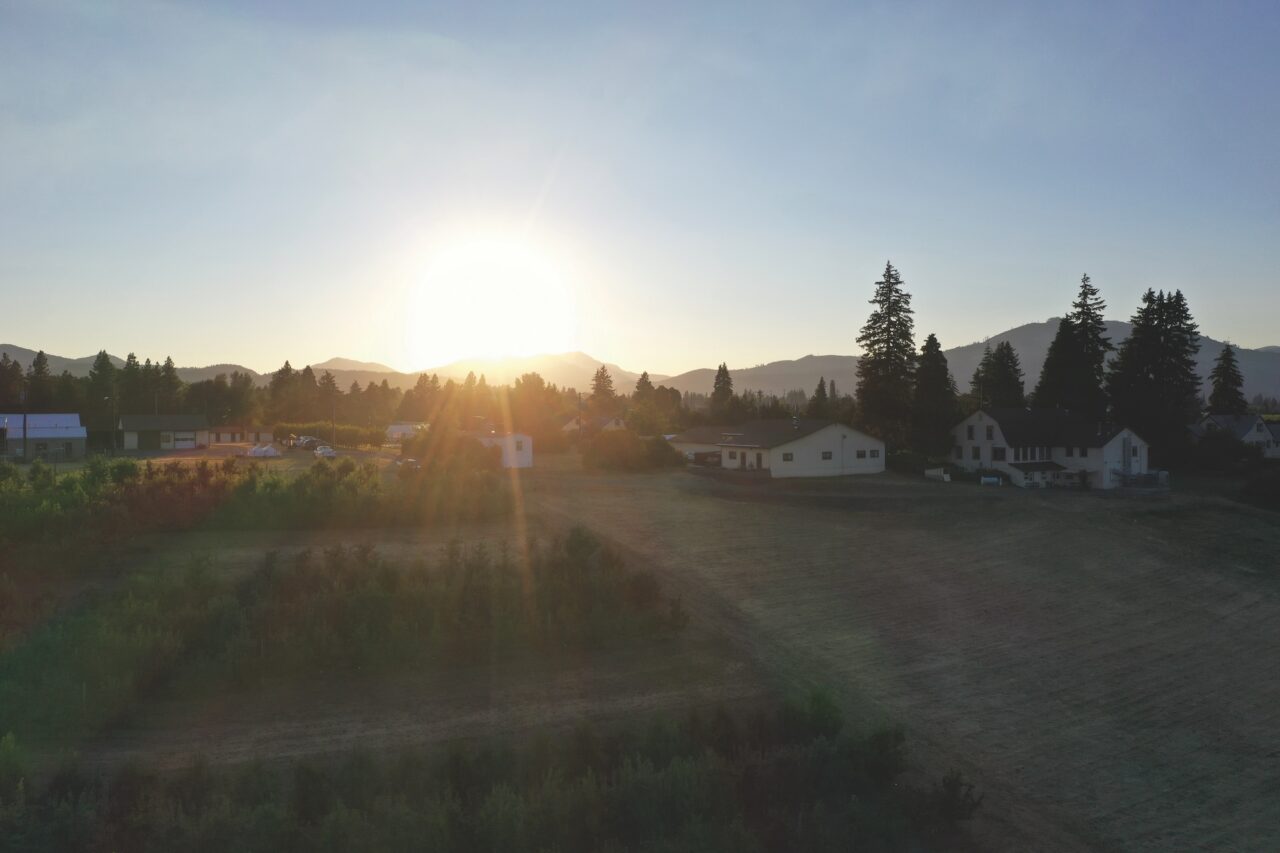
The thousands of acres of orchards surrounding the station give those questions particular urgency, as growers contend with labor challenges. For a landscape so closely tied to tree fruit, understanding whether robotics can help address harvesting challenges has significance well beyond the research orchard.
It also calls for expertise that crosses college boundaries. Joe Davidson, an associate professor in the College of Engineering, brings the robotics side to the orchard. Pearson brings a mission rooted in the region’s tree-fruit industry.
Together, they carry Oregon State’s land-grant legacy into a new era of agriculture. The mission remains familiar: connect scientific research, student learning, and agricultural needs. Now, that mission includes teaching machines to recognize fruit and learning how a robotic hand can harvest it.
The experiment reflects the approach behind OSU’s Digital Agriculture & Conservation Systems Initiative—a university-wide collaborative effort that connects emerging technologies with the practical challenges producers face, while preparing students to lead the future of agriculture and natural resources. OSU’s statewide research stations and Extension programs provide places to develop, test, and refine those tools under real growing conditions. Here, that process begins among the pear trees.
Pearson describes two fronts for the research. One is computer vision: teaching a system to identify fruit and keep track of its position relative to the tree. A robot must be able to locate what it is supposed to pick.
The other front is mechanical. Once the fruit is located, how should the machine reach, grip, and remove it?
“What kind of armature is needed? What kind of grip and angle is needed to replicate that human reaction of grabbing fruit and removing it from a tree?” Pearson asks.
The robot’s apple-picking technology is itself still experimental, and adapting it to pears introduces new questions. The team is learning that the movement of the arm matters. In the pear trials, they’ve found that a pull-and-lift motion is easier. Adapting the system means studying the action of picking, as well as the hardware that makes it possible.
The equipment combines commercially available components with the team’s own work. A mobile base carries an industrial robotic arm, allowing the system to move along orchard rows. At the end of the arm, a specialized gripper brings two actions together.
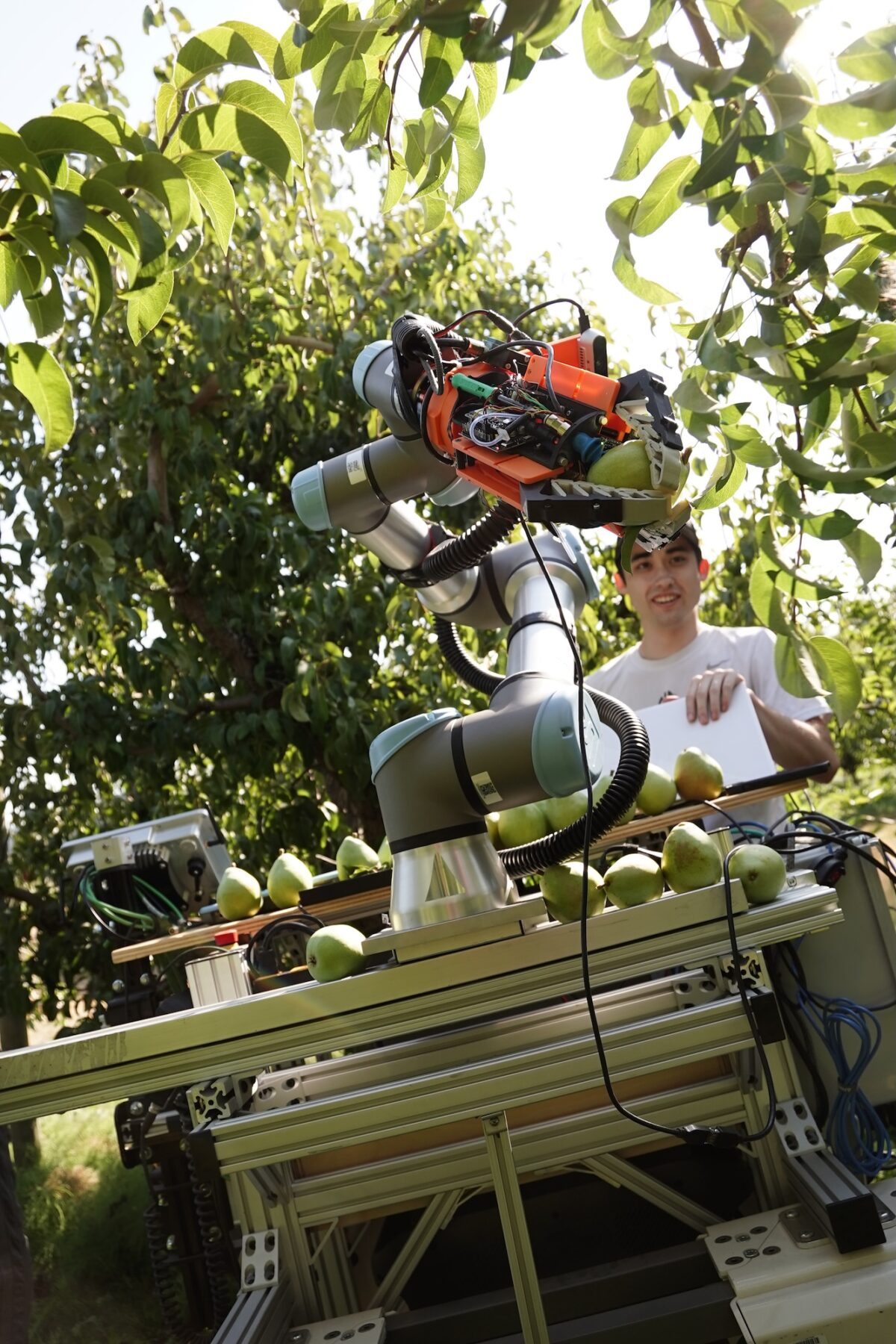
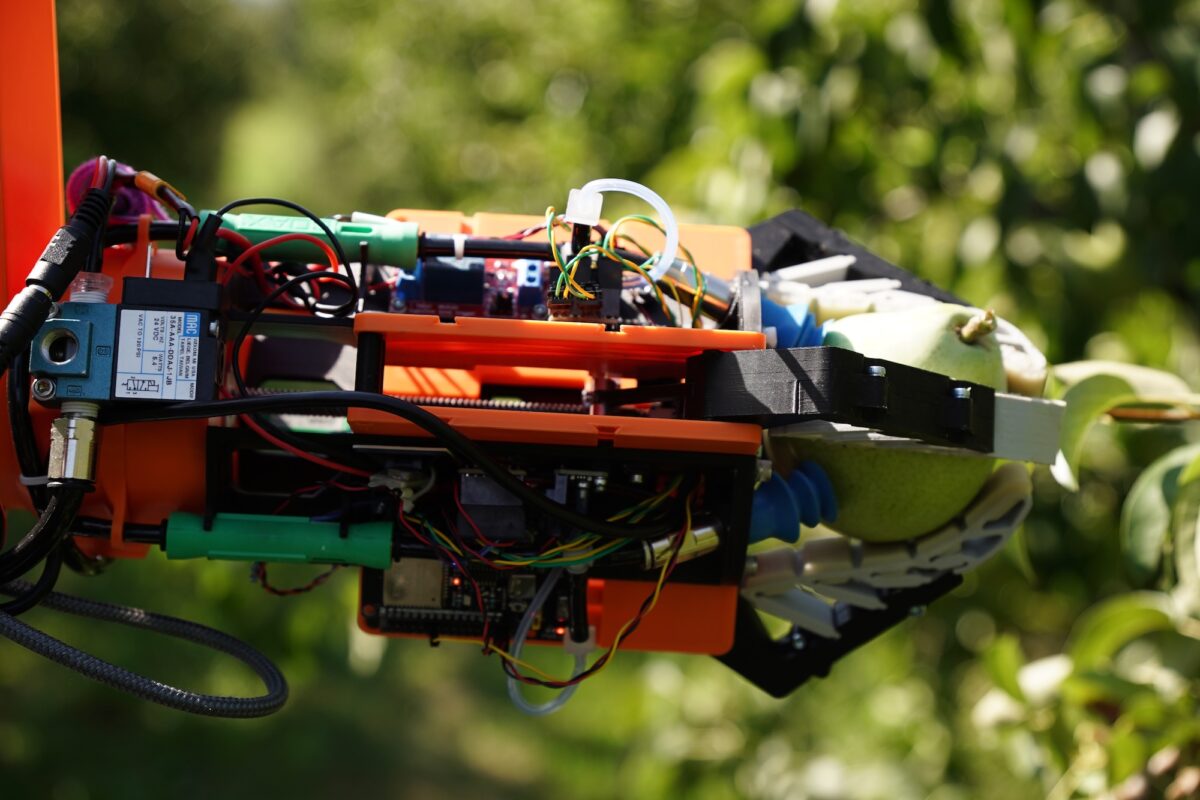
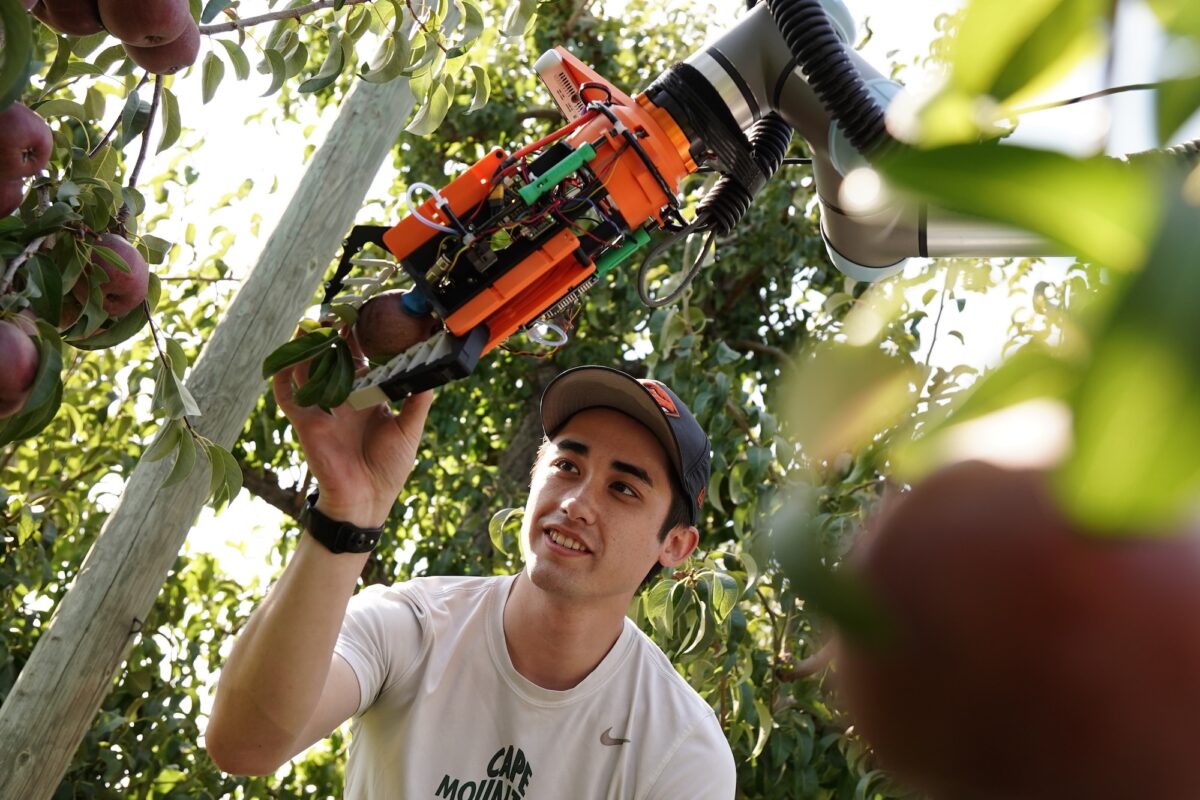
Jared Northrop, a master’s student in robotics, explains that three suction cups make initial contact and pull the fruit inward. Three fingers mounted around the outside then close to grasp it. The orchard provides a testing ground for how those parts work together.
There is little time to spare. The team describes a field-testing opportunity of roughly one week. When equipment breaks down during that short window, repairs compete with the time needed to collect data and continue the research. Spare parts are an essential part of the trip to the orchard.
That practical constraint underscores how early this work remains. The trials are a chance to learn what works, what fails, and what needs to change. Each adjustment helps the researchers understand the distance between a promising mechanism and a dependable harvesting system.
For Pearson, the ability to work through those questions together is itself a reason for enthusiasm. The tools are evolving, but the strength behind them is enduring: people bringing different knowledge to a shared agricultural challenge.
“And one of the most cool, awesome things about working for any university, especially one like Oregon State University, is that we get to work together,” he says.