
How María Zamora Re helps shape Oregon’s water future through OSU research and Extension
__
By Sara Webster
Applied Humanities student
T
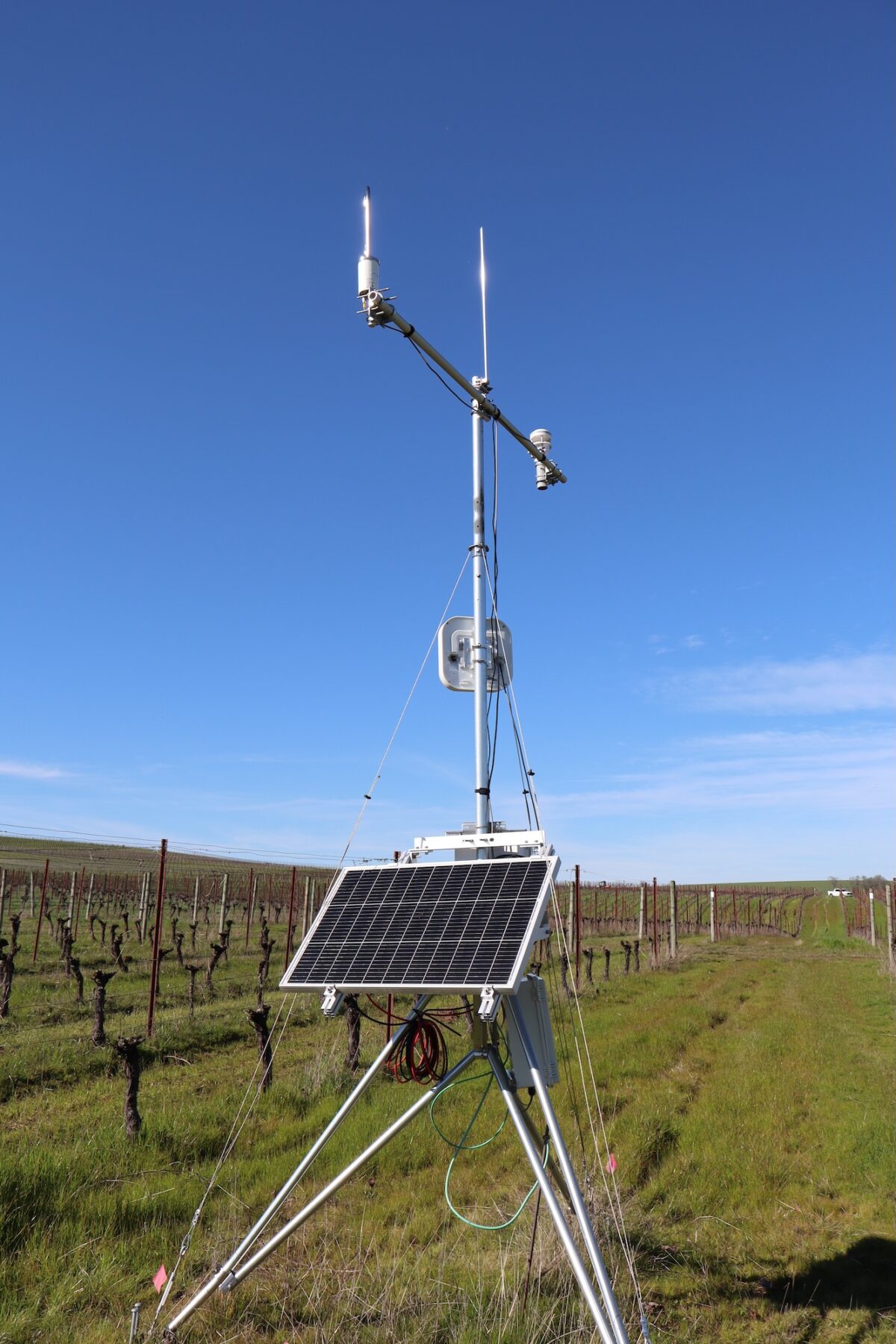
he soil between the pinot noir grapevines is warm and aromatic, a blend of buttery clay and early spring that yields softly under the soles of María Zamora Re’s boots. Canary buttercups dot the vineyard’s edge, bright against the valley sky, like watercolor left to dry. The earth feels alive here. She pauses, allowing the field to settle around her—the light, the slope, the bloom of dampness in the soil. These small cues are where her work begins, informing the irrigation choices she helps growers make.In the middle of the vineyard stands an evapotranspiration sensor. It is a tall, solar-powered station that measures how water moves through the field. Its instruments track sunlight, wind, and temperature. These measurements help estimate how quickly moisture leaves the soil and vines. For Zamora Re, they provide a real-time view of the vineyard’s water needs. The information helps growers distinguish between moments when irrigation is necessary and when the soil can hold its own, translating field-level observation into more efficient water use across Oregon’s farms. As climate patterns shift and water availability becomes less predictable, this kind of precision is vital.
Zamora Re helps growers grasp how water travels through their land and how to steward it wisely. An assistant professor and statewide Extension irrigation specialist at Oregon State University, she is one of the researchers and Extension faculty working across Oregon to address water challenges. She guides farmers through dwindling water supplies and unpredictable seasons. Her method is rooted as much in practical experience as in science, shaped by landscapes that taught her to view water not merely as a resource, but as a vital relationship interwoven throughout life. “I grew up in the kind of environment where there is a sense of protecting our land all the time,” María Zamora Re says.
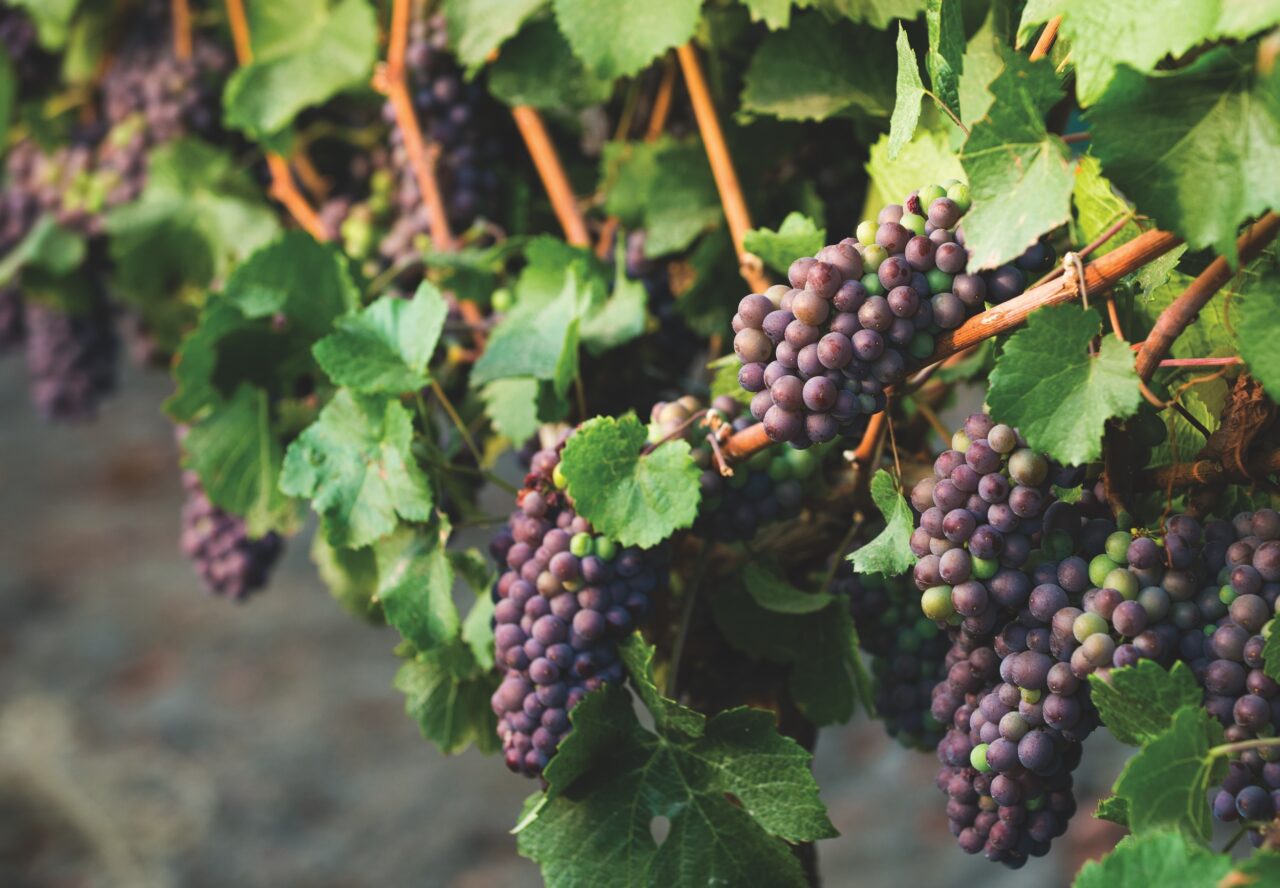
Pinot noir grapes ripen on the vine. Understanding how water moves through soil and plants helps growers make irrigation decisions that support both fruit production and careful water use.
__
Her journey began in the lush, rain-soaked hills of Costa Rica and on her grandparents’ coffee farm in Nicaragua, where the air was thick with the scent of earth and ripening fruit. In those places, water, labor, and ecological diversity were understood collectively. She learned the symbiotic work of landscapes, species, and hands, seeing how resources and effort sustain even the smallest crops.
“Once you understand all the different resources required to have that little thing that seems so insignificant, you realize this is not something you can take for granted.” That early connection to the land shaped Zamora Re’s sense of responsibility to the planet and set her on a path to EARTH University in Costa Rica. There, her education unfolded not just in classrooms, but in the fields themselves: hands deep in soil, learning the language of water and the realities of tending crops. Her studies in agronomy became an apprenticeship in stewardship, where science and care for the land were inseparable.
In her third year at EARTH University, Zamora Re took an internship in north central Florida focused on irrigation and water management. The setting was far from the tropics she knew—one where fields survived not on steady rainfall but on mindful, human-guided decisions. This experience marked a turning point in her understanding of water stewardship.
Back in Costa Rica, she brought this new perspective to her first jobs. Then, just as she was weighing her future, an unexpected email arrived from her old supervisor, inviting her to return to Florida for research and community work that would shape her graduate studies. “I couldn’t believe it,” she said. “It felt like destiny.”
Immersed again in the karst flatlands of Florida, Zamora Re witnessed the impact of a water system stretched to its limits. Wells ran dry. Sinkholes opened in strawberry fields. Farmers depended on groundwater to shield crops from freezes. She navigated a new environment, a new scientific vocabulary, and English. “My English was not very good-looking,” she jokes. She also entered graduate research that challenged her to understand how water decisions reverberate through the lives of those whose work and welfare depend on it.
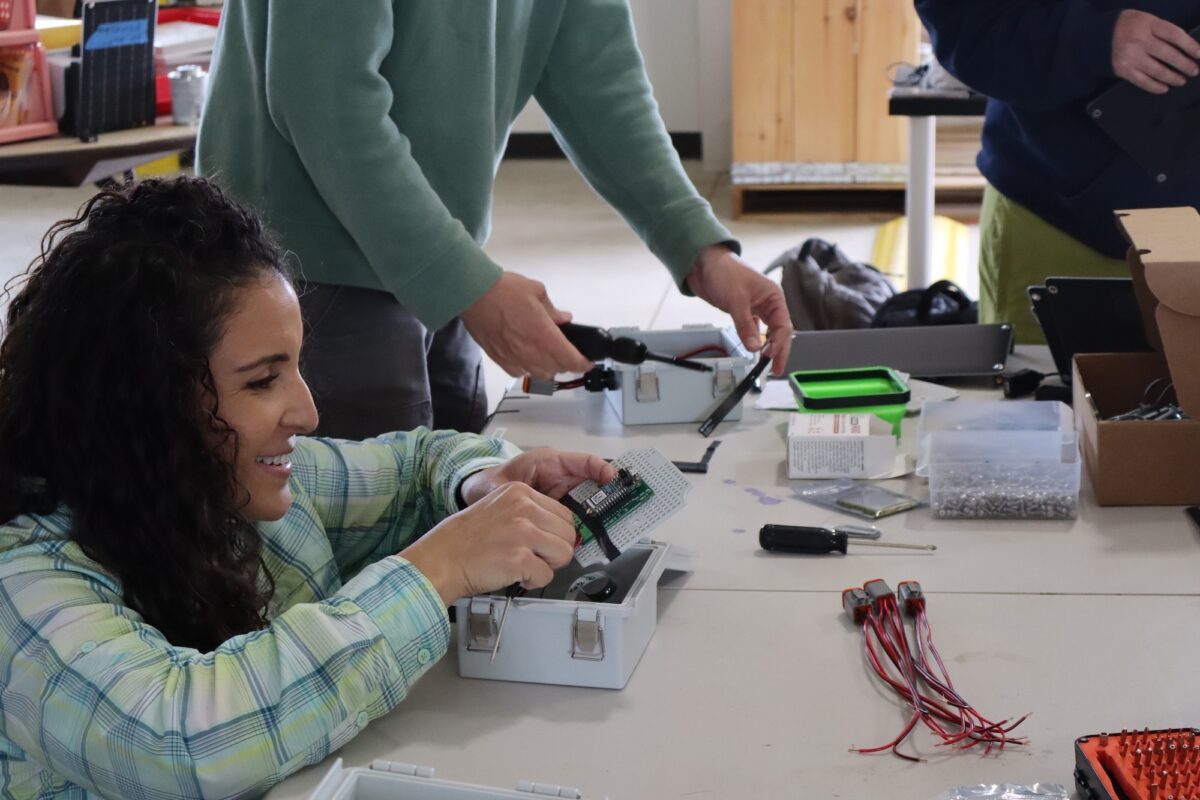
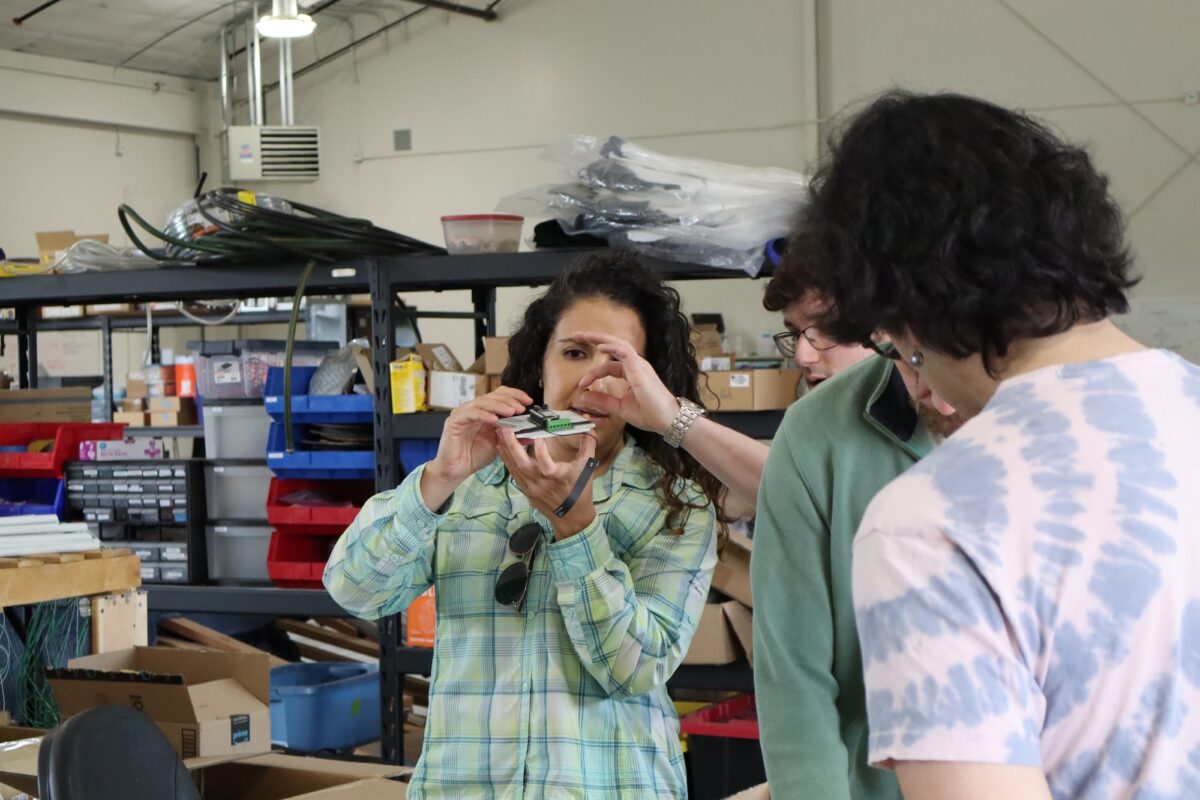
During her graduate studies, Zamora Re worked closely with producers and researchers. She saw how each irrigation decision affected not only crops but also whole communities. This period reinforced a simple truth: knowledge only matters if it leaves the page and takes root in the world. “I wanted to make a difference in people’s lives,” she said. “Leave a footprint bigger than just on paper.”
She wanted her research to reach communities firsthand, equipping growers and stakeholders to recognize both the power and vulnerability of their water systems. That ambition naturally pointed her toward Extension work—a field where university research drives real-world solutions, and where her background and purpose could unite to serve others.
When a position opened at Oregon State University, Zamora Re brought her growing expertise to Extension work in Oregon—a mosaic of landscapes known for its fog-draped forests, salt-bright coastlines, and quilted farmlands, each shaped by distinct hydrology and irrigation needs.
Today, she helps growers navigate those challenges through the Agricultural Water Management Technical Assistance Program, or AgTAP. The program connects OSU Extension, the Oregon Agricultural Experiment Station and faculty across disciplines, bringing her irrigation expertise together with colleagues’ work in groundwater, agrohydrology and the human dimensions of water management. Together, they develop tools, field demonstrations and technical assistance to help agricultural producers make informed water decisions.
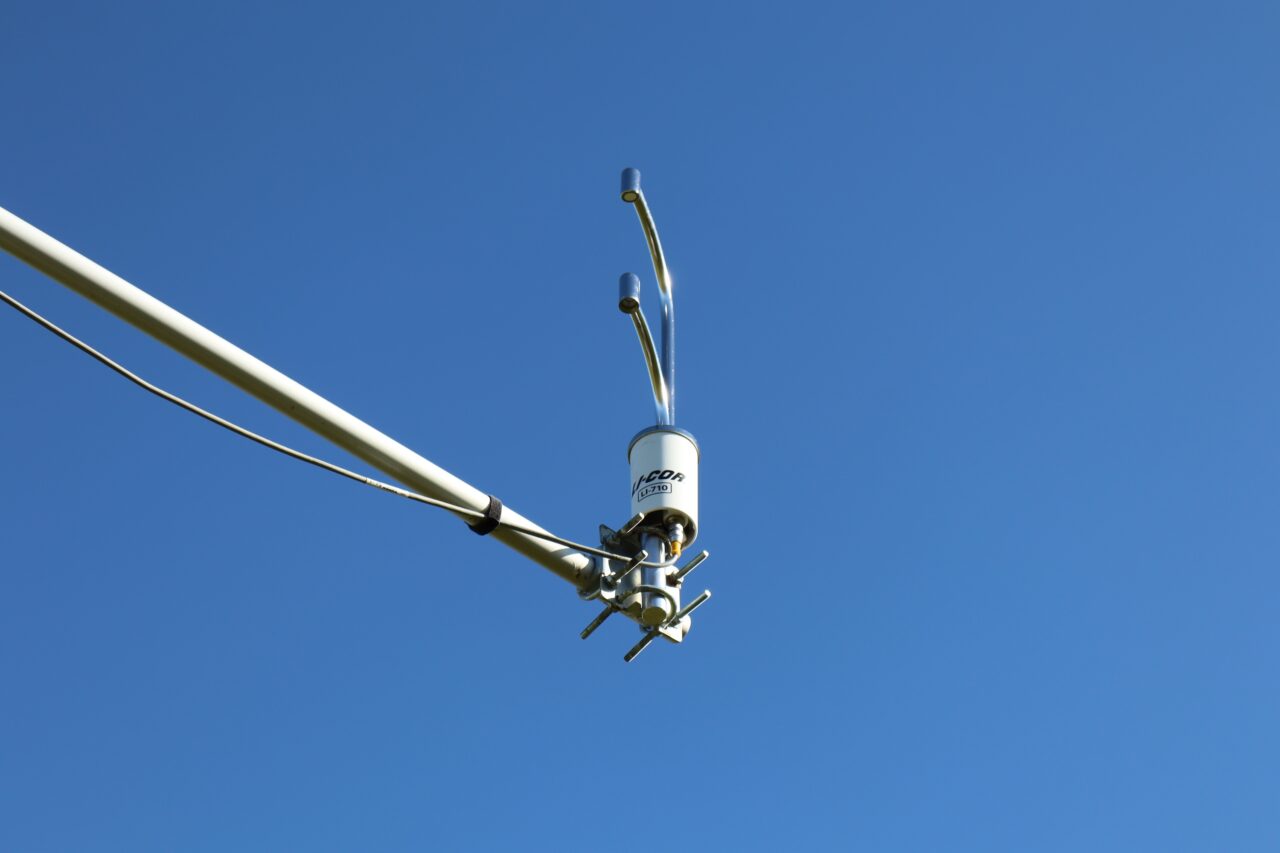
For Zamora Re and her team, that effort takes root in the field. They are developing a statewide network of evapotranspiration and soil moisture monitoring sites, translating measurements into irrigation guidance and making the data publicly available.
Building on her Extension philosophy, Zamora Re led development of a 10-part OSU Extension irrigation curriculum. It covers topics from water rights and irrigation scheduling to soil moisture monitoring and system maintenance, helping growers put research into practice.
That work also travels. Her program’s Water on Wheels trailer brings hands-on irrigation demonstrations to producers, water managers and students across Oregon, giving them a chance to explore technologies and ask questions.
Her guidance is already reshaping how growers use water across the state. In a squash field outside Aurora, her work showed that growers could use almost half the water they normally would and still harvest strong yields. In Southern Oregon, pear trials revealed that switching from sprinklers to drip irrigation could cut water use dramatically without hurting fruit quality. And in the high desert near Ontario, potato growers learned they could reduce irrigation by nearly a third with no loss in yield. These kinds of clear, field-tested results are giving farmers a steadier way to make decisions and helping Oregon prepare for a future where every drop matters.
For Zamora Re, water is never just a resource. It is a shared gift, precious and irreplaceable. It belongs to communities, landscapes, and future generations. She believes that we can truly value what sustains us only by understanding the effort, fragility, and connections behind every drop. Her work follows the idea that sustainability needs economic viability, social grounding, and environmental soundness.
She carries these ethics into the field, blending the precision of engineering with a deep promise to keep water reliable—not just for today, but for generations yet to come. Looking forward, Zamora Re envisions a future where water is seen not only as a commodity, but as a relationship that calls for reciprocity, foresight, and shared care. “I hope my work helps the next generation to become more conscious about water’s irreplaceable role—not just as a resource that sustains crops, communities, and our lives, but as a shared responsibility that demands stewardship, equity, and foresight in the face of a changing climate.”
This story was developed through OSU Story Lab, a College of Liberal Arts program where students work with faculty and media professionals to tell research stories and develop science communication skills.